Explore our flagship active transceivers, passive optical cassettes, and high-density fiber connectors engineered for telecom & enterprise architectures.
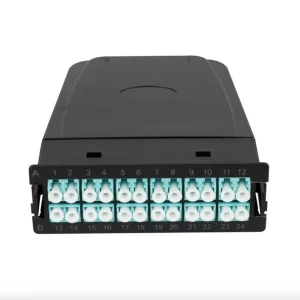
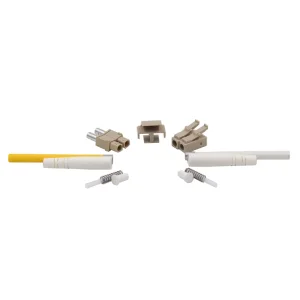
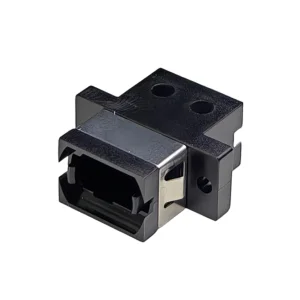
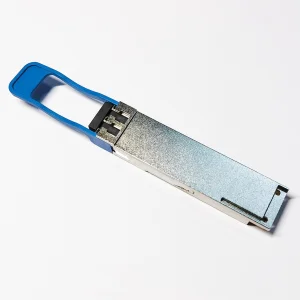
Established in 2012 in Hong Kong as a high-tech communication enterprise, Kocent Optec Limited has grown into one of China's premier fiber optic termination product manufacturers and solution providers. We are dedicated to developing and manufacturing state-of-the-art optical communication solutions spanning both passive infrastructure and active optoelectronic devices. Our product architecture supports telecommunication networks, enterprise infrastructures, and next-generation cloud data centers worldwide.
By leveraging our extensive production capacity, engineering experience, and rigorous validation metrics, we maximize client infrastructure performance. We define ourselves not merely as a hardware manufacturer, but as an integration partner. In an era where bandwidth limits define enterprise growth boundaries, we provide the scalability, reliability, and precision needed to outperform competition.
"We place intense emphasis on deep customer collaboration. Our engineering teams integrate closely with customer technical staff, validating custom transceivers and fiber distributions to deliver bespoke connectivity profiles."

How Modern High-Speed Optical Architectures Resolve AI, Machine Learning, and Cloud Compute Bottlenecks.
Modern AI LLM (Large Language Model) training demands massive compute nodes working in parallel. The resulting East-West traffic within the data center makes traditional 100G networks obsolete. The migration to 400G and 800G optical interconnections significantly minimizes latency and prevents packet dropouts during deep learning validation epochs.
By transitioning to Silicon Photonics (SiPh), ODM 400G optical modules integrate lasers, modulators, and detectors directly onto a silicon substrate. This lowers total power consumption (measured in picojoules per bit), dramatically reduces thermal output, and decreases physical footprint in dense switch arrangements.
Unlike traditional Non-Return-to-Zero (NRZ) encoding which transmits 1 bit per symbol, 400G transceivers leverage 4-level Pulse Amplitude Modulation (PAM4) at 53.125 Gbaud per lane. This technique doubles the capacity of optical fiber links, though it demands sophisticated Digital Signal Processors (DSPs) to compensate for noise and inter-symbol interference.
The global optical module market is undergoing rapid evolution. Key commercial drivers include the hyperscale infrastructure expansion by major cloud providers (AWS, Azure, Google Cloud, Meta) alongside the rollout of 5G Standalone (SA) core networks by tier-1 telecom operators. Optical transceivers, particularly in the 400G QSFP-DD and OSFP form factors, represent the critical interconnect interface between high-performance spine/leaf switches and server NICs.

From a logistics and supply chain perspective, modern operators look for ODM (Original Design Manufacturer) partnerships to circumvent the premium pricing associated with switch-branded transceivers. An open-source, MSA-compliant (Multi-Source Agreement) module from an ODM offers identical electrical, mechanical, and optical interface parameters while enabling granular firmware customization to support multi-vendor environments.
Kocent Optec addresses this dynamic through advanced fabrication capabilities. Our design cycles accommodate custom EEPROM programming, enabling full compatibility with legacy and modern switch OS environments (Cisco IOS, Arista EOS, Junos OS, etc.). By ensuring 100% component-level validation, we bridge the gap between custom ODM cost efficiencies and strict enterprise reliability.
Furthermore, as transmission rates advance towards 800G and 1.6T, established ODMs must maintain robust silicon wafer sourcing, high-yield EML (Electro-absorption Modulated Laser) validation, and highly automated packaging processes to secure long-term product supply and pricing stability.
A granular look at transceiver parameters, mechanical packaging, and active-to-passive transition roadmaps.
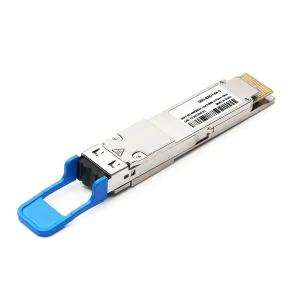
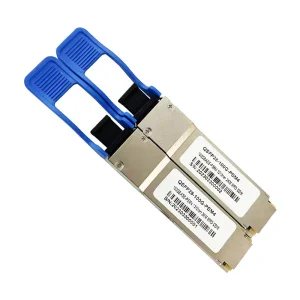
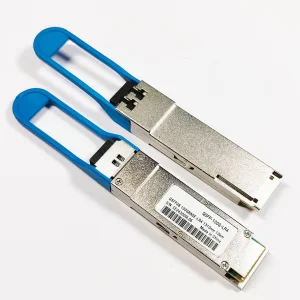
Our active product suite leverages the QSFP-DD (Quad Small Form-factor Pluggable Double Density) standard. The interface utilizes 8 electrical lanes operating at 50G PAM4 to aggregate to 400G line-rate bandwidth. Standard module architectures include:
We implement high-grade Digital Signal Processors (DSP) equipped with integrated Forward Error Correction (FEC) engines to guarantee pre-FEC Bit Error Rates (BER) well within IEEE 802.3bs compliance levels.
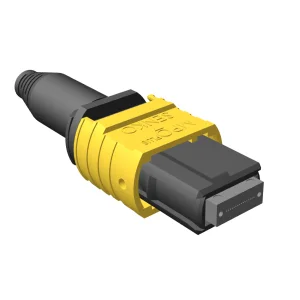
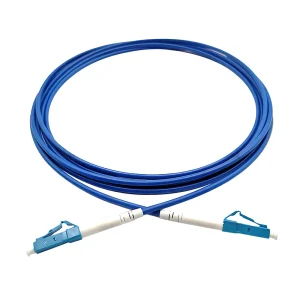
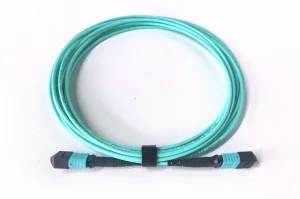
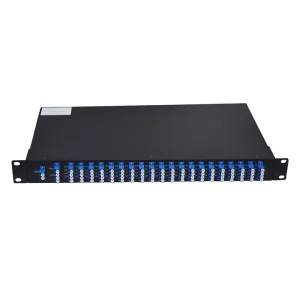
An optical module is only as reliable as the passive infrastructure it plugs into. To support 400G networks, we develop ultra-low-loss (ULL) fiber management components:
By producing both active transceivers and high-performance passive fiber termination lines, Kocent Optec guarantees end-to-end optical budget integrity.

With more than 13 years of manufacturing history, our operational framework is built on international quality compliance and structured testing regimes. Telecom operators require massive MTBF (Mean Time Between Failures) profiles and rigorous physical layer documentation. All Kocent Optec modules and fiber systems are subjected to 100% optical parameter validation before leaving the factory floor, including eye-diagram evaluation, spectral analysis, and environmental chamber testing in accordance with Telcordia GR-468-CORE and GR-326-CORE.
Our ODM and OEM solutions are trusted globally, successfully winning competitive tenders hosted by international telecom operators and cloud consortiums. We supply key network nodes for:
To ensure smooth deployments across North America, the European Union, South America, and the Asia-Pacific region, Kocent Optec coordinates local supply-chain compliance, securing CE, FCC, RoHS, and UL certificates. Our engineers work alongside local system integrators to configure the optimal passive-to-active balance, matching fiber budgets to transceiver dynamic ranges.
The roadmap toward next-generation bandwidth scaling and energy management.
To address the massive energy footprint of onboard DSP chips, LPO represents an evolutionary step for 800G and 1.6T transceiver packaging. By utilizing a linear driver and transimpedance amplifier (TIA) directly without a power-hungry DSP, LPO modules dramatically reduce module power consumption and thermal load, though they place higher equalization burdens on the host ASIC.
As speeds surpass 1.6T, pluggable modules face serious physical limitations due to high-frequency electrical trace attenuation. CPO resolves this by mounting the optical engines directly on the same substrate as the network switch ASIC. Kocent Optec's engineering roadmap incorporates silicon-based passive and active alignment interfaces to support early-stage CPO developments.
Resolving common engineering queries about 400G deployment, hardware compatibility, and optical network budgets.
400G transceivers, particularly QSFP-DD form factors, pack high-performance DSPs and optical engines into a compact space, drawing between 10W and 14W of power. This generates significant heat. Kocent Optec mitigates this thermal load by using optimized internal component layouts, high-performance heat-dissipation pads, and specialized zinc alloy shells with integrated cooling fins to maintain module junction temperatures within standard commercial limits (0°C to 70°C).
We operate a dedicated hardware compatibility lab equipped with contemporary host platforms from major hardware brands. Each transceivers' EEPROM is flashed with vendor-specific configurations and verified in-system. This ensures proper protocol exchange, DDM (Digital Diagnostics Monitoring) readout, and error-free link-up on the host switch port without throwing hardware compatibility warnings.
As link speeds increase, optical power margins become tighter. For instance, the optical budget for a 400G DR4 transceiver is roughly 3.0 dB. If generic cassettes with high insertion loss (e.g., 0.75 dB per connection) are utilized, a patching path with multiple junctions will exhaust the optical budget, resulting in frame loss. Kocent Optec's ULL MTP cassettes limit insertion losses to ≤ 0.35 dB, preserving link margin for reliable signal performance.
PAM4 modules cannot link directly to native NRZ optical interfaces because the signaling schemes are fundamentally different. However, many modern switches integrate a gearbox DSP that can translate 4 lanes of 50G PAM4 from a QSFP-DD module into 8 lanes of 25G NRZ to feed legacy systems, or output breakout configurations like 4x100G (PAM4) and 8x50G (PAM4).
Complete your high-speed deployment with our line of 400G/200G/100G modules, patch cords, and multiplexers.
 KOCENT OPTEC