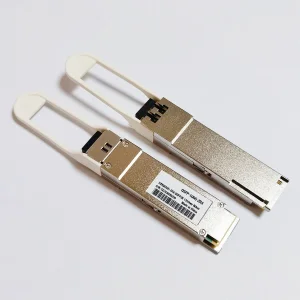
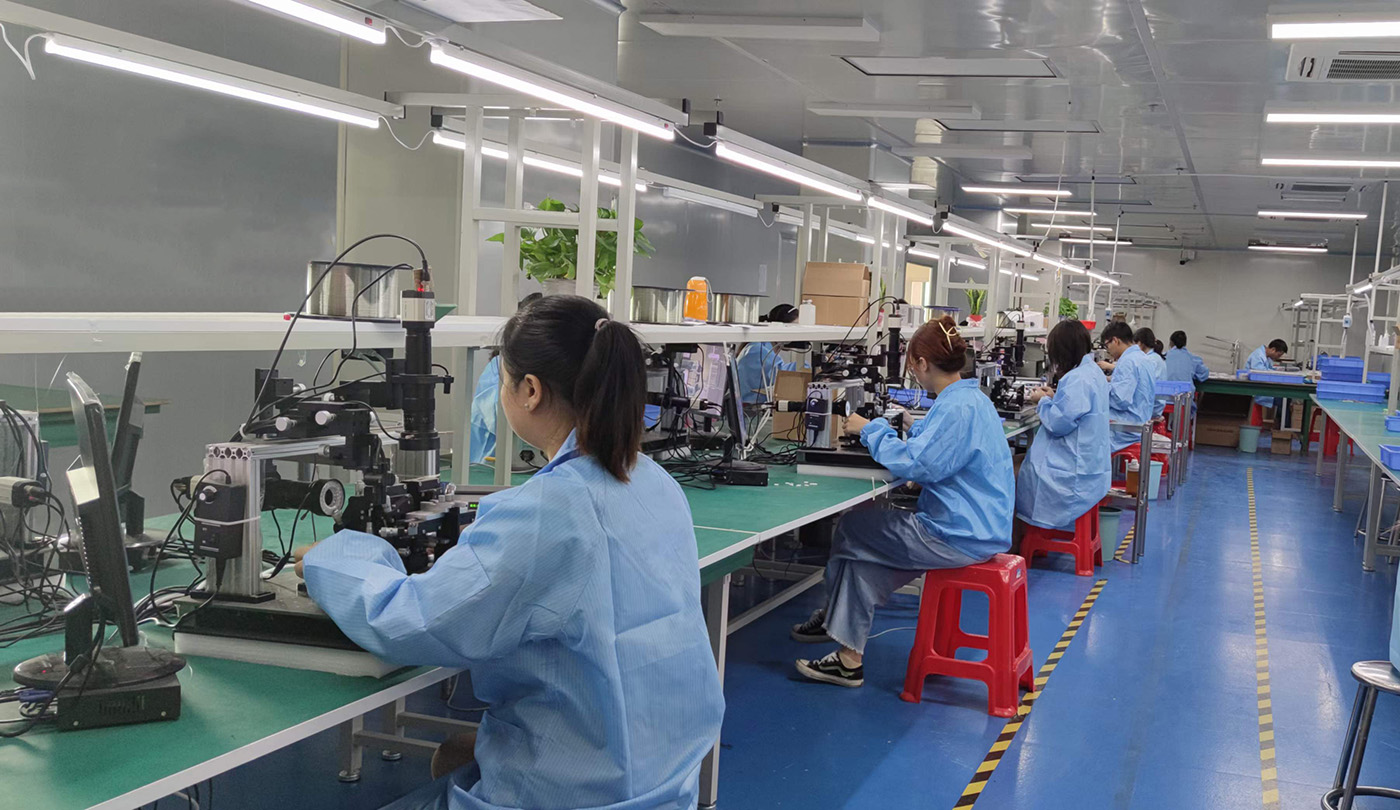
Direct from our state-of-the-art termination facility. Enterprise-grade compliance and structural reliability.
A Comprehensive Industry Whitepaper on Direct Attach Copper Performance, Transmission Integrity, and OEM Procurement Economics.
Direct Attach Copper (DAC) Twinax cables have emerged as the foundational pillar of modern high-speed storage area networks, enterprise routing pathways, and hyperscale cloud infrastructure topologies. Functioning as a high-density, low-latency, and highly cost-effective copper interconnect alternative to optical transceivers, DAC cables use a shielded twin-axial copper core to transmit differential signals over distances up to 7-10 meters. By eliminating the necessity for optical sub-assemblies (such as laser diodes and photodiodes), they drastically lower overall network operating expenditures (OpEx) while reinforcing signal integrity.
The physical construction of a high-quality Twinax cable incorporates two inner copper conductors insulated by a foam dielectric layer, wrapped in a spiral silver or aluminum shield, and ultimately encased in a durable outer PVC or LSZH (Low Smoke Zero Halogen) jacket. This configuration maintains a precise 100-ohm impedance match across the transmission line. This level of physical stability is critical for mitigating insertion losses, return losses, and electromagnetic interference (EMI) at high baud rates.

Procurement teams face critical trade-offs between Passive DACs and Active Copper Cables (ACCs). Passive DACs contain no active equalization circuitry, relying entirely on the host system's ASIC to manage signal degradation. This limits their operational distance to approximately 1 to 5 meters depending on the AWG rating (e.g., 30AWG to 24AWG). In contrast, ACCs utilize integrated circuits (ICs) within the connector shell to boost and clean the electrical signal. This architecture extends the effective physical distance of high-density copper interconnects up to 10 meters, allowing network designs to span multiple adjacent racks within the datacenter while maintaining low power consumption compared to Active Optical Cables (AOCs).
China's high-tech manufacturing sector, particularly within the Pearl River Delta region encompassing Hong Kong and Shenzhen, has evolved into the world's most robust ecosystem for telecommunications hardware. Kocent Optec Limited, established in 2012 in Hong Kong, operates at the center of this advanced logistics network. By integrating top-tier raw copper drawing facilities, automated precision injection molding, and highly standardized assembly lines, Chinese manufacturers deliver unrivaled supply chain flexibility.
For international sourcing managers, buying direct from a Chinese OEM factory is about more than just finding the lowest unit price. It is about leveraging deep material science expertise, rapid prototyping capabilities, and massive production capacities. The local manufacturing cluster in China optimizes the sourcing of raw components, ensuring that custom wire gauges (AWG), pull-tab configurations, and EEPROM coding architectures can be modified, validated, and shipped under incredibly tight lead times.
Utilizing high-precision assembly lines for consistent impedance control and automated electrical testing.
Meeting rigorous RoHS, REACH, CE, and FCC standards to ensure problem-free entry into global markets.
Multi-vendor compatibility coding supports major routing and switching platforms natively.
At Kocent Optec Limited, our 13+ years of telecom manufacturing experience has shown us that signal integrity is non-negotiable. Every DAC Twinax assembly undergoes rigorous physical and electrical validation protocols. We utilize high-end vector network analyzers (VNAs) to measure S-parameters, including Insertion Loss (SDD21), Return Loss (SDD11), and Near-End/Far-End Crosstalk (NEXT/FEXT).
Our testing protocols verify that every shipment achieves bit error rates (BER) below 1E-15, in line with IEEE 802.3 and InfiniBand trade association standards. By testing 100% of our products before dispatch, we ensure that operators run highly reliable high-speed data pathways without risking interface damage or packet drops in production environments.

Established in 2012 in Hong Kong as a high-tech communication enterprise, Kocent Optec Limited has solidified its status as one of China's premier fiber optic and high-speed copper termination manufacturers. We specialize in designing and producing robust interconnect components across active and passive product sectors. Our reach spans modern hyperscale datacenters, high-speed regional telecom loops, and complex enterprise networks worldwide.
Over more than a decade of active global deployment, our commitment to win-win partnerships has earned us successful tenders with major telecom operators. Our custom OEM and ODM builds are integrated into some of the most demanding network topologies in the industry.
Modern transmission architectures require flexible physical layer structures. High-speed DAC Twinax cables are widely deployed across key operational scenarios:
ToR (Top-of-Rack) Data Center Switches: High-density 25G and 100G DAC assemblies link servers directly to adjacent top-of-rack switches. With lengths typically under 3 meters, passive DACs eliminate the power budget requirements of optical transceivers, lowering datacenter energy footprint.
High-Frequency Trading (HFT): In HFT server environments where microsecond latency is critical, the direct electrical-to-electrical connection of passive copper DACs outperforms optical solutions by avoiding latency-inducing optical-to-electrical-to-optical (O-E-O) conversions.
5G Edge Cloud Hubs: Standardized outdoor cabinets and distribution hubs deploy rugged DAC cables to link high-density distribution units. These assemblies feature customized temperature tolerance parameters and reliable ingress protections to ensure durability.
The telecommunications and datacenter industries are undergoing a massive transition driven by the rise of artificial intelligence, high-performance computing (HPC), and dense machine-learning clusters. Standard SFP+ (10G) and QSFP28 (100G) configurations are rapidly upgrading to QSFP-DD (400G) and OSFP (800G) form factors. This transition requires significant evolution in physical copper cable manufacturing.
To transmit high-bandwidth signals without excessive attenuation, manufacturers use PAM4 (Pulse Amplitude Modulation 4-Level) encoding. PAM4 transmits twice as much data per clock cycle as NRZ, but it is much more sensitive to noise and signal loss. This requires highly precise manufacturing. Every millimeter of exposed copper wire, the geometry of the soldering pad, and the shielding must be manufactured with extreme accuracy to meet strict return loss and crosstalk standards.
Expert answers to critical engineering, manufacturing, and global distribution questions.
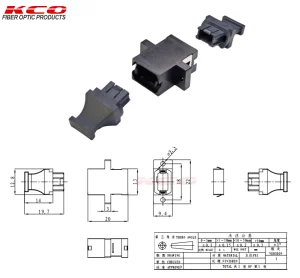
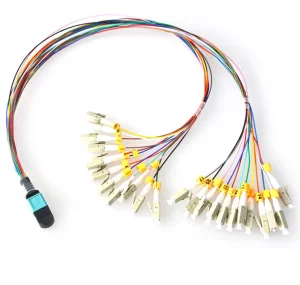
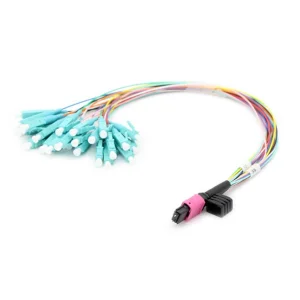
Explore our passive coupler adapters, fanout breakout modules, and fiber optics.
 KOCENT OPTEC