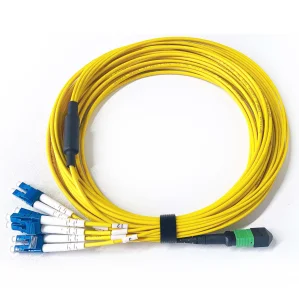
Direct from the ODM facility. Comprehensive range of high-performance passive fiber networking products engineered for carrier-grade applications.
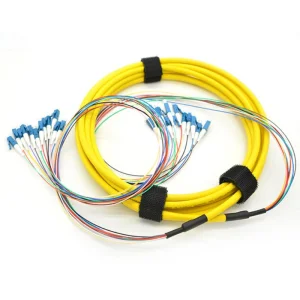
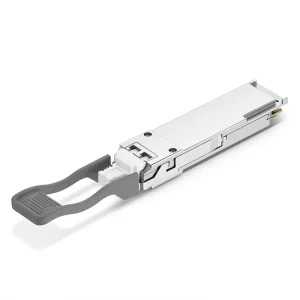
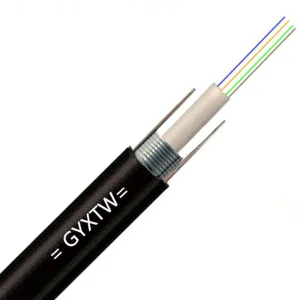
In modern enterprise networks and cloud data centers, high-density optical cabling acts as the physical foundation of high-speed transmission. The transition from legacy dual-fiber channels to parallel optics has established the 12-core multimode fiber optic cable as the fundamental baseline for high-bandwidth infrastructures.
Driven by machine learning clusters, ultra-large-scale cloud deployments, and IoT aggregation points, global demand is shifting decisively toward optimized 50/125µm fiber cores. This evolution is characterized by several key market dynamics:

Evaluating the mechanical, optical, and environmental properties required for carrier-grade applications.
| Technical Parameters | OM3 Multimode (50/125µm) | OM4 Multimode (50/125µm) | OM5 WBMMF (50/125µm) |
|---|---|---|---|
| Effective Modal Bandwidth (850nm) | ≥ 2000 MHz·km | ≥ 4700 MHz·km | ≥ 4700 MHz·km (up to 953nm) |
| Attenuation Coefficient (at 850nm) | ≤ 2.3 dB/km | ≤ 2.3 dB/km | ≤ 2.3 dB/km |
| Attenuation Coefficient (at 1300nm) | ≤ 0.6 dB/km | ≤ 0.6 dB/km | ≤ 0.6 dB/km |
| Max Link Length (10G BASE-SR) | 300 meters | 400 meters | 440 meters |
| Max Link Length (40G / 100G SR4) | 100 meters | 150 meters | 150 meters (single wavelength) |
| Outer Jacket Options | LSZH (Low Smoke Zero Halogen), OFNP (Plenum), OFNR (Riser), Double Jacket/Armored | ||
| Tensile Strength (Long Term) | Up to 600N (depending on structure and Kevlar density) | ||

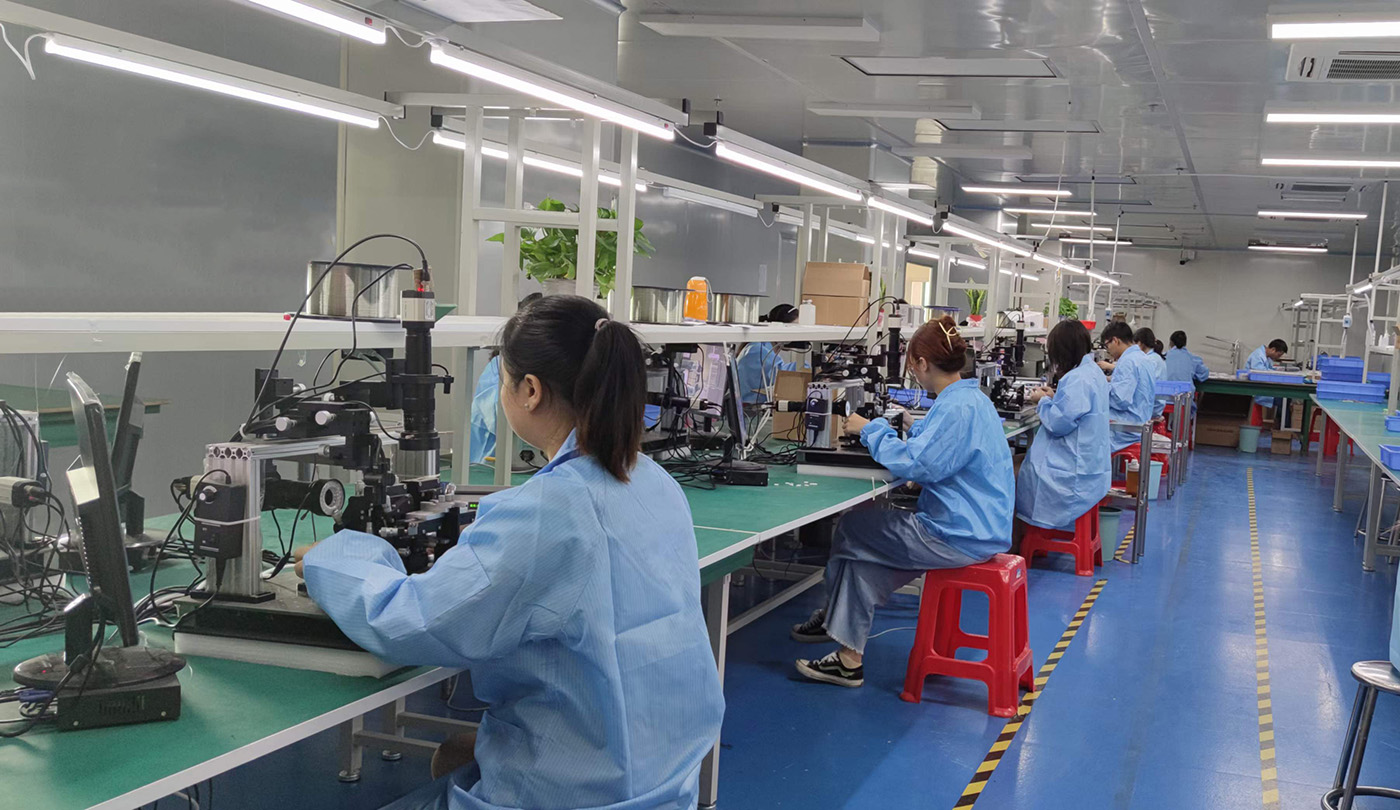
As a leading manufacturing hub for high-performance networks, China's fiber optic industry has integrated Factory 4.0 automation to optimize quality and capacity. At Kocent Optec Limited, we leverage state-of-the-art production systems to deliver consistent quality and competitive pricing.
Our ODM model provides several operational advantages to global distributors and network engineers:
Understanding cost structures, lead times, and quality metrics is crucial for sourcing departments.
Procurement choices shouldn't be based solely on initial cable cost per meter. Smart procurement teams evaluate splice time, installation space, compliance certifications (CPR Euroclass, UL ratings), and potential upgrade paths. This long-term view minimizes future installation and upgrade costs.
For large rollouts, supply chain delays can impact overall timelines. Working with vertically integrated manufacturers ensures predictable production schedules. We minimize transport delays through direct logistics agreements and local customs warehousing, ensuring on-time delivery.
Premium fiber networks demand documentation. Enterprise buyers require OTDR test traces, 3D interferometer metrics for connectors, insertion loss data sheet attachments, and material certification reports. We inspect and test 100% of our products before shipping to guarantee field performance.
Established in 2012 in Hong Kong as a high-tech communications enterprise, Kocent Optec Limited has grown into a leading manufacturer and solution provider of fiber optic termination products in China.
Our focus is the development and manufacture of passive and active fiber optic products for telecommunication networks, enterprise networks, and data centers. With over 13 years of manufacturing experience, we strictly follow industry standards using mature, scientific methods. This ensures timely delivery and guarantees that 100% of our products are fully tested and inspected prior to shipment.
By leveraging our extensive production capacity and years of field experience, we help our customers maximize performance, expand their core competencies, and stay ahead of the competition. We view ourselves as your collaborative partner in fiber optic connection solutions, working closely with your engineering teams to build reliable network foundations.
Years Production Experience
Inspection & Testing Before Dispatch
Global Telecom Operators Served
Exporting Countries & Regions
Where 12-core multimode configurations deliver maximum performance and reliability.
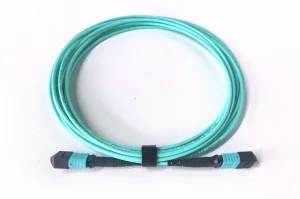
Used to build high-capacity spine-and-leaf switches. MPO/MTP-terminated 12-core OM4 trunks allow rapid migration from 10G to 40G/100G lanes, providing the optical performance required to minimize signal degradation.
Interconnects central servers, local distribution frames, and distinct office segments. Designed to manage high-volume traffic across building distribution blocks while resisting EMI/RFI issues.
For factory floors requiring reliable communications. Features heavy-duty outer jackets that protect internal optical fibers from mechanical stress, chemicals, moisture, and wide temperature swings.
Addressing the common technical and commercial questions from network planners and procurement officers.
The cost is primarily determined by fiber glass grading (OM3, OM4, or OM5), structural design (tight-buffered indoor vs. loose-tube double-jacketed outdoor), jacket flame-retardant ratings (LSZH, Riser/OFNR, Plenum/OFNP), and customization options such as pre-terminated MPO connectors.
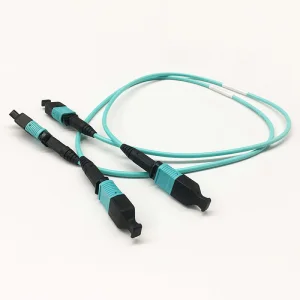
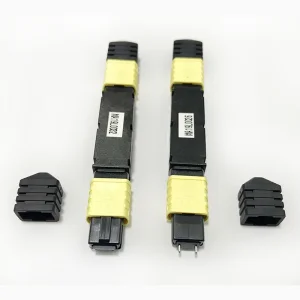
The 12-core structure aligns with standard parallel optics. Most high-speed transceivers (like QSFP+ and QSFP28) utilize MPO-12 connecters, which expose 8 fibers for transmission and leave 4 dark. This setup is highly cost-effective and simplifies future expansion compared to splitting larger cables.
OM3 supports 10G links up to 300m, and 40G/100G links up to 100m. OM4 extends those lengths to 400m for 10G and 150m for 40G/100G. OM5 is optimized for SWDM (Shortwave Wavelength Division Multiplexing), allowing multi-wavelength transmission over a single fiber pair to significantly boost overall bandwidth.
We use automated assembly lines alongside specialized testing equipment. Every batch undergoes 3D interferometer testing for end-face geometry, alongside insertion and return loss inspections. All test reports are archived and shipped with the products for full traceability.
Standard custom orders take 7 to 15 days, depending on structure complexity and volume. Our direct supply links for raw materials enable us to maintain fast turnaround times even during peak demand periods.
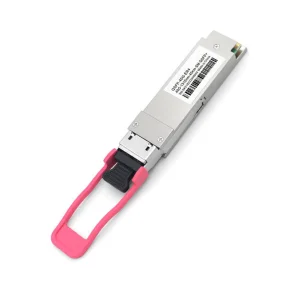
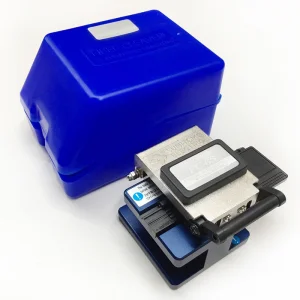
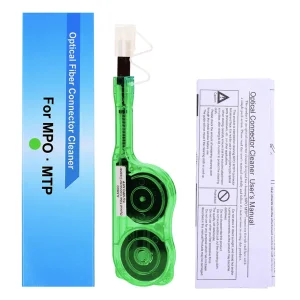
Yes. As a full-range supplier, we manufacture both single-mode (G652D, G657A1, G657A2) and multimode (OM1, OM2, OM3, OM4, OM5) assemblies, patch panels, splitters, transceivers, and toolsets to provide complete end-to-end solutions.
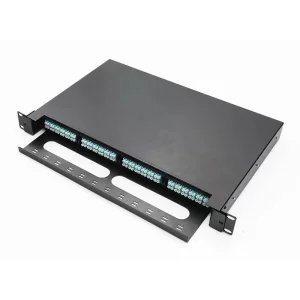
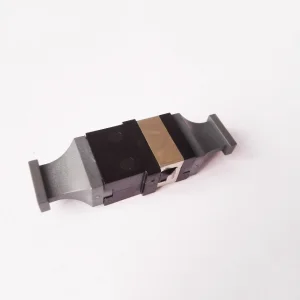
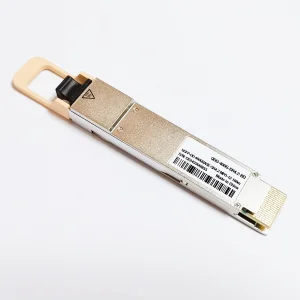
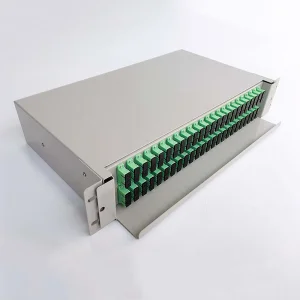
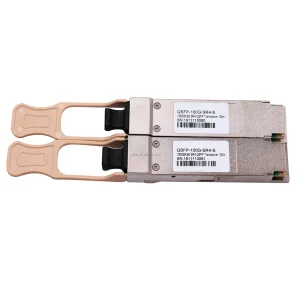
Explore our termination boxes, transceivers, adapters, and patch cords engineered for high-density modern networks.
 KOCENT OPTEC