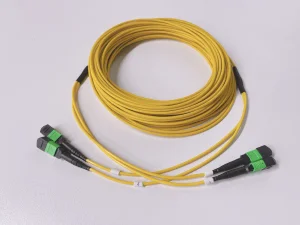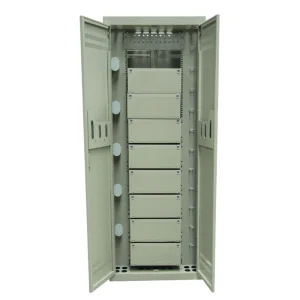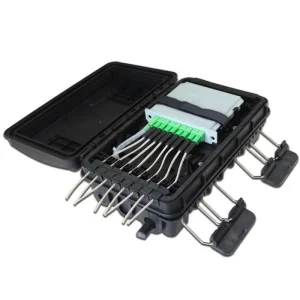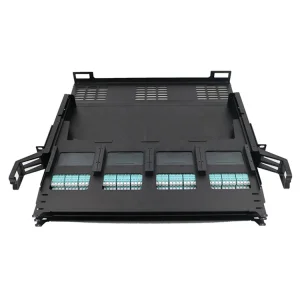
Wholesale High Density 144fo MPO Universal Connectivity Platform Patch Panel Manufacturer, Quotes
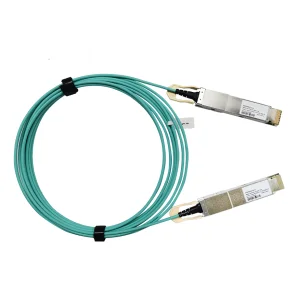
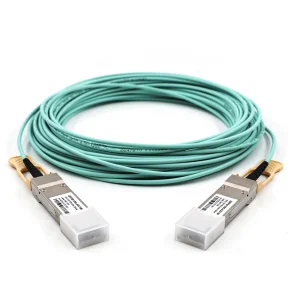
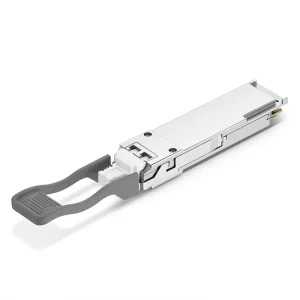
Cheap 400Gb/s QSFP-DD to 2x200G QSFP56 AOC Active Optical Cable MMF Manufacturer, Factories
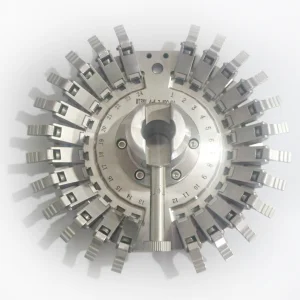
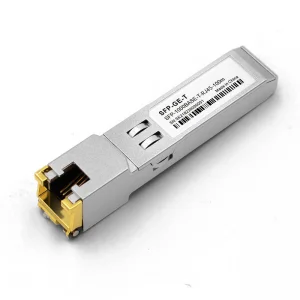
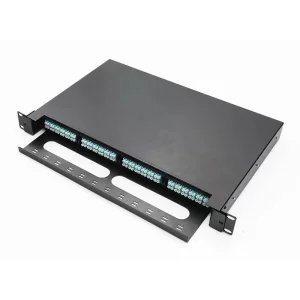
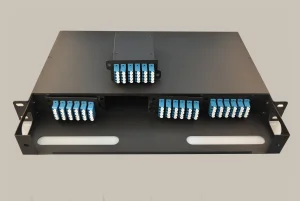
ODM High Density 96fo MPO Fiber Optic Patch Panel with 4 modules Manufacturers, Supplier
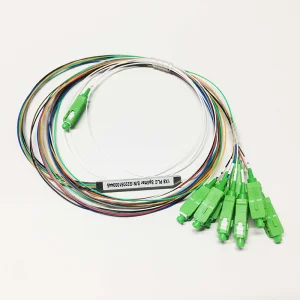
Wholesale 1x8 1*8 1:8 Mini tube type PLC fiber optic splitter Suppliers, Products
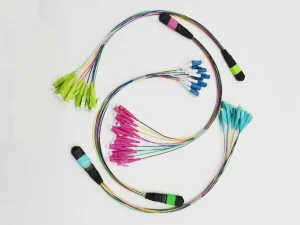
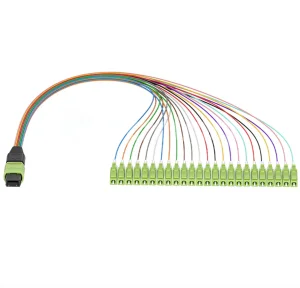
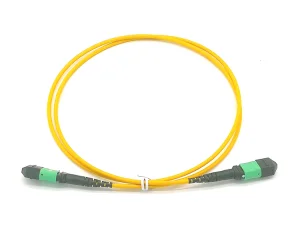
OEM MM OM5 12fo MPO To LC, 12fibers MTP to LC 0.3m Fan-out Patch Cord Manufacturers, Quotes
While 100G and 400G deployments occupy the core networks of hyperscalers, the 40G (Quad Small Form-factor Pluggable Plus - QSFP+) standard remains a dominant workhorse for medium enterprise distribution layers, localized access points, and regional telecom exchanges looking for solid cost-to-performance metrics.
The rapid integration of Internet of Things (IoT) frameworks and distributed edge data centers has surged demand for localized 40G optical backhauls. 40G SFP modules offer the ideal bandwidth capacity to bridge access ports with high-speed aggregation switches without over-capitalizing on optical budgets.
By conforming strictly to MSA specifications, including SFF-8436 and SFF-8636, modern 40G QSFP+ transceivers guarantee standard mechanical and electrical dimensions. This enables plug-and-play installation in multivendor hardware ecosystems across major enterprise switches.
Technical Insight: 40G SFP (QSFP+) modules utilize four independent optical transmit and receive channels, typically running at 10.3125 Gbps per lane. Depending on the fiber type and reach, they can utilize 850nm VCSEL transmitters for short-range MMF applications (e.g., QSFP-40G-SR4) or 1310nm DFB lasers for long-distance SMF links (e.g., QSFP-40G-LR4).
The global transceiver market relies heavily on Chinese production ecosystems, which offer unparalleled integration of upstream and downstream component supply. At Kocent Optec Limited, our manufacturing facilities utilize advanced automated optoelectronic assembly processes to drastically reduce production cycle times while maintaining microscopic alignment precision.
This clustering effect reduces domestic sourcing lead times for essential sub-components—such as Transmit Optical Sub-Assemblies (TOSA), Receive Optical Sub-Assemblies (ROSA), high-frequency PCBAs, and robust metal alloy cast shells—down to just a few days, compared to weeks in less dense tech regions. This advantage is passed directly to procurement departments via reduced lead times, cost-efficient scaling, and predictable shipping cycles.

One of the primary challenges for data center managers and IT administrators is proprietary vendor locking. Major active equipment manufacturers configure their switches to check for specific vendor signatures inside the module’s EEPROM (Electrically Erasable Programmable Read-Only Memory) register. Non-compliant transceivers will throw errors, disable ports, or reject connections.
As a leading OEM supplier, Kocent Optec solves this challenge by implementing a dedicated compatibility lab. We profile and replicate vendor signatures across over 50 prominent switch brands. By rewriting the configuration registers and serial numbers inside SFF-8636 memory spaces, our 40G QSFP+ transceivers are recognized instantly, enabling standard performance metrics such as DDM (Digital Diagnostic Monitoring) without voiding host equipment warranties.
| Transceiver Variant | Wavelength (nm) | Fiber Interface Type | Max Reach | Typical Application |
|---|---|---|---|---|
| 40GBASE-SR4 | 850nm | MTP / MPO-12 (MMF) | 150m (OM4) | Intra-rack, switch-to-switch interconnects in data centers |
| 40GBASE-LR4 | 1271, 1291, 1311, 1331nm (CWDM) | Duplex LC (SMF) | 10km | Campus backbones and long-haul metropolitan routing |
| 40GBASE-ER4 | 1271, 1291, 1311, 1331nm (CWDM) | Duplex LC (SMF) | 40km | High-performance carrier networks, remote branch links |
| 40GBASE-BiDi | 850 / 900nm | Duplex LC (MMF) | 150m (OM4) | Easy upgrade path from 10G to 40G utilizing legacy LC cables |
Every module sent from Kocent Optec is subjected to a battery of physical, electrical, and optical tests designed to exceed industry-standard BER (Bit Error Rate) expectations. Quality is not a statistical variable; it is verified for every single product.
Utilizing high-frequency sampling oscilloscopes, we map optical transmitter eye-patterns. This confirms rise/fall times, jitter, and extinction ratios conform to exact IEEE 802.3ba tolerances, reducing signal degradation over long distances.
Optical gear must perform in variable environments. Our modules undergo temperature cycling tests inside environmental chambers ranging from -40°C to +85°C for industrial deployments, ensuring zero thermal drift of laser wavelengths.
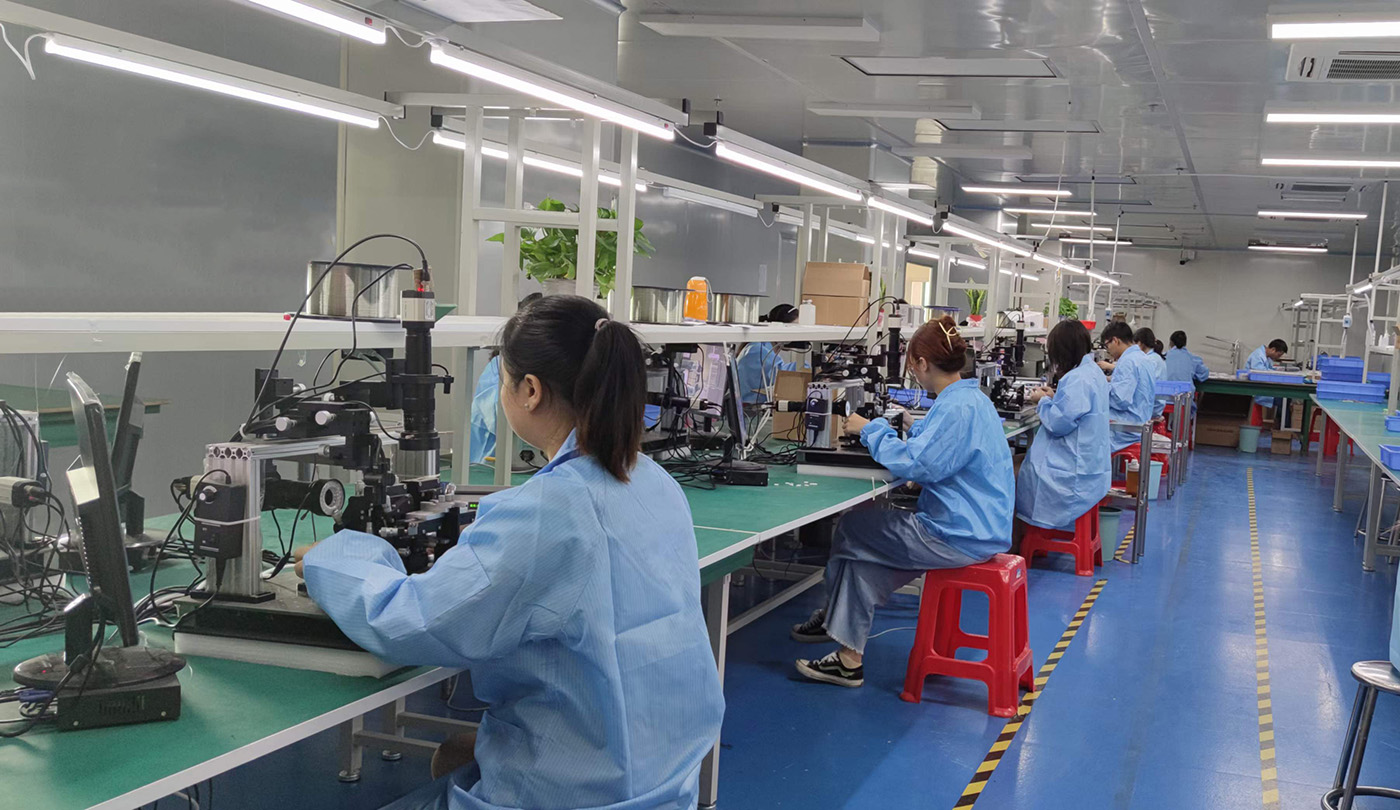
Every fiber ferrule, connector casing, and mechanical pull-tab is checked. End-face geometry is analyzed using digital microscopes to prevent contamination and damage from scratch marks before final packaging.

In ultra-low-latency financial operations, microsecond delays translate to lost revenue. Utilizing customized short-reach 40G QSFP+ transceivers paired with high-quality MTP fiber trunks allows trading centers to achieve minimal signal attenuation and deterministic latency profiles. Coupled with 100% end-face cleaning and inspection protocols, this guarantees zero-packet loss during peak market volume.
National telecom operators deploy robust, long-range 40G QSFP+ LR4 and ER4 transceivers to manage connections between municipal backhaul offices. Our units support the digital diagnostic functions (DDM/DOM) required by telecommunication engineers to monitor laser power levels, temperature, and operating voltage in real-time, simplifying remote troubleshooting procedures.
Industrial applications frequently face physical stressors such as electromagnetic interference, vibration, and dust. By selecting steel-cased optical switches and ruggedized 40G links over traditional copper connections, smart ports and manufacturing campuses isolate critical telemetry networks from surrounding heavy machinery noise.
Upgrading a datacenter or local network backbone requires long-term technical planning. A primary concern for operators is avoiding forklift upgrades of existing fiber lines. In this context, 40G platforms offer standard upgrade vectors. For example, utilizing parallel MPO optics (like 40GBASE-SR4) allows companies to reuse existing optical cabling to deploy four individual 10G breakout connections to remote switches.
When migrating to 100G (using QSFP28 form factors) or 400G, the physical infrastructure of MPO-based cabling remains identical, allowing operators to swap active transceiver units without pulling new fiber lines through conduits. Kocent Optec manufactures high-density patch panels, universal connectivity platforms, and AOC cables designed specifically to facilitate this hardware bridge.
Kocent Optec Limited, established in 2012 in Hong Kong as a hi-tech communication enterprise, is one of China's leading fiber optic termination product manufacturers and solution providers. We are dedicated to developing and manufacturing fiber optic communication products ranging from passive to active categories for telecommunication networks, enterprise networks, and data centers.
By leveraging our extensive experience and excellent production capacity we gained over the years, we magnify the outcome for our valuable customers, which ultimately expands their core competencies and helps them outperform competitors. We place emphasis on customer collaboration, and we define ourselves as your valuable partner in fiber optic connection solutions. We believe our differentiators are your perceived advantages.
With more than 13 years of experience in manufacturing telecommunication fiber optic products, we follow strictly fiber optic industry standards by using mature scientific methods to deliver your products on time and ensure that 100% of products are tested and inspected before shipment.
Years of sales and service experience have enabled us to win customers from different regions. Today, we have customers from East Asia, Southeast Asia, Middle East, Eastern Europe, Western Europe, Northern Europe, South America, North America, North Africa, and South Africa. Win-win cooperation is our constant goal. Many of our OEM and ODM products have won the Telecom Operator tender and satisfy end-user requests.
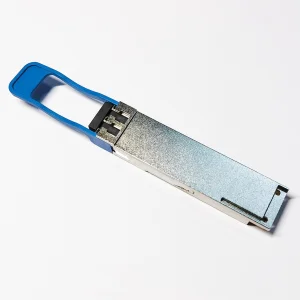
Strictly speaking, there is no "40G SFP". The standard SFP form factor is physically limited to a single channel (often limited to 10G or 25G). To support 40G, the industry developed the QSFP+ (Quad Small Form-factor Pluggable Plus), which integrates four transmission lanes. Using four lanes of 10G, a QSFP+ transceiver delivers the necessary 40G aggregate throughput. Often, buyers refer to 40G transceivers generically as "40G SFP", but their physical and mechanical structure is defined under the QSFP+ standard (SFF-8436).
Our lab retains high-end switch models from these brands. During OEM production, our engineers program the transceiver's EEPROM with specific vendor codes, matching checksum requirements and product identification arrays. This guarantees that host systems identify the transceivers correctly, preventing diagnostic startup failures.
MTP/MPO connections are typically used in 40GBASE-SR4 transceivers, where the four independent transmit channels and four receive channels are carried over eight fiber strands within a single MTP connector. This parallel optics structure supports high-density racking. Alternatively, duplex LC interfaces (used in 40GBASE-LR4 and ER4 transceivers) combine all four wavelengths multiplexed internally onto a single transmit fiber and demultiplexed on a single receive fiber, minimizing physical patch cord counts over longer fiber routes.
Yes, this is achieved utilizing a splitter/breakout configuration. By using a 40GBASE-SR4 MPO transceiver on the host switch and connecting an MPO-to-4x LC duplex breakout cable, the aggregate 40G signal splits into four independent 10G signals. The host switch port must support port splitting (channelization) configuration settings.
DDM/DOM is a standardized interface feature defined in SFF-8472. It allows real-time monitoring of key module operating parameters, including laser transmitter power, receiver optical power, internal temperature, operating voltage, and laser bias current. This data helps network administrators predict outages and identify signal degradation issues.
High temperature increases laser threshold currents and can cause wavelength shifts (thermal drift). Commercial grade transceivers operate within a range of 0°C to 70°C, while industrial-grade transceivers are built to operate from -40°C to 85°C. Kocent Optec uses hermetic sealing and high-grade thermal dissipation pads inside our industrial products to limit wavelength fluctuations and maintain link integrity.
Yes. OEM and original brand modules are often manufactured in the same facilities, using the same components (such as lasers from II-VI/Lumentum and IC chips from Broadcom). Kocent Optec matches or exceeds original equipment specifications, ensuring equal performance at a significantly lower cost.
High-quality manufacturers should comply with international directives. Our modules are CE certified for European compliance, FCC certified for radiation and signal interference limits in the Americas, RoHS compliant to certify the absence of hazardous substances, and UL/TUV certified for electrical and eye safety (laser safety class 1 compliance).
 KOCENT OPTEC