In the modern digital economy, latency is a competitive liability. However, optical fibers, the very arteries of our global communication network, remain highly vulnerable to physical stress, rodent damage, crushing forces, and extreme temperatures.
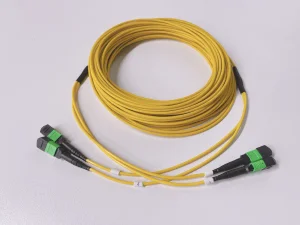
Standard fiber patch cords, while highly efficient for structured data center environments, fail under mechanical loads. To mitigate the risk of connection outages, enterprises globally are upgrading to armored patch cables. Designed with a built-in protective layer—typically helical stainless steel armor—these cables combine the high-bandwidth properties of optical fiber with the structural strength of metallic tubing.
According to recent industry forecasts, the global market for ruggedized fiber solutions is expanding at a CAGR of 8.4%. This growth is accelerated by the rise of Edge Computing, industrial automation (Industry 4.0), and the deployment of FTTA (Fiber to the Antenna) architectures in 5G wireless networks. By installing armored configurations, operators bypass the requirement for rigid external conduits, dropping installation time by up to 50% and minimizing network downtime.
Examine the multi-layered defensive structure and high-performance components that make armored fiber assemblies standard in critical environments.
An internal spiral stainless steel band (SUS304) provides robust protection against high physical crush forces (up to 3000N/100mm) while retaining complete bending flexibility and preventing kinks.
Leveraging G.657.A1/A2 single-mode and OM3/OM4/OM5 multi-mode glass formulas, our optical cores operate with minimal light loss even under micro-bend stress and tight routing geometries.
Custom-extruded outer jackets available in LSZH (Low Smoke Zero Halogen), heavy-duty PVC, or weather-resistant TPU. Designed to comply with RoHS, REACH, and UL94-V0 fire safety metrics.
As physical space in server cabinets continues to shrink, traditional armored cables (which are heavy and bulky) can crowd airflow paths. The current industry design trend highlights mini-armored fiber patch cables (OD 2.0mm to 3.0mm). These solutions provide equivalent mechanical strength to larger configurations but feature a reduced footprint, allowing them to route through standard management trays and high-density panels.
Leading China's fiber optic termination industry through state-of-the-art production systems, stringent quality assurance, and customer-focused engineering.
Kocent Optec Limited established in 2012 in Hongkong as a hi-tech communication enterprise, is one of China's leading fiber optic termination product manufacturer and solution provider.
We're dedicated to developing and manufacturing fiber optic communication products ranging from passive to active categories for telecommunication networks, enterprise networks and data centers.
By leveraging our extensive experience and excellent production capacity we gained over the years, we magnify the outcome for our valuable customers, which ultimately expands their core competencies and helps them outperform competitors. We place emphasis on customer collaboration, and we define ourselves as your valuable partner in fiber optic connection solutions. We believe our differentiators are your perceived advantages.
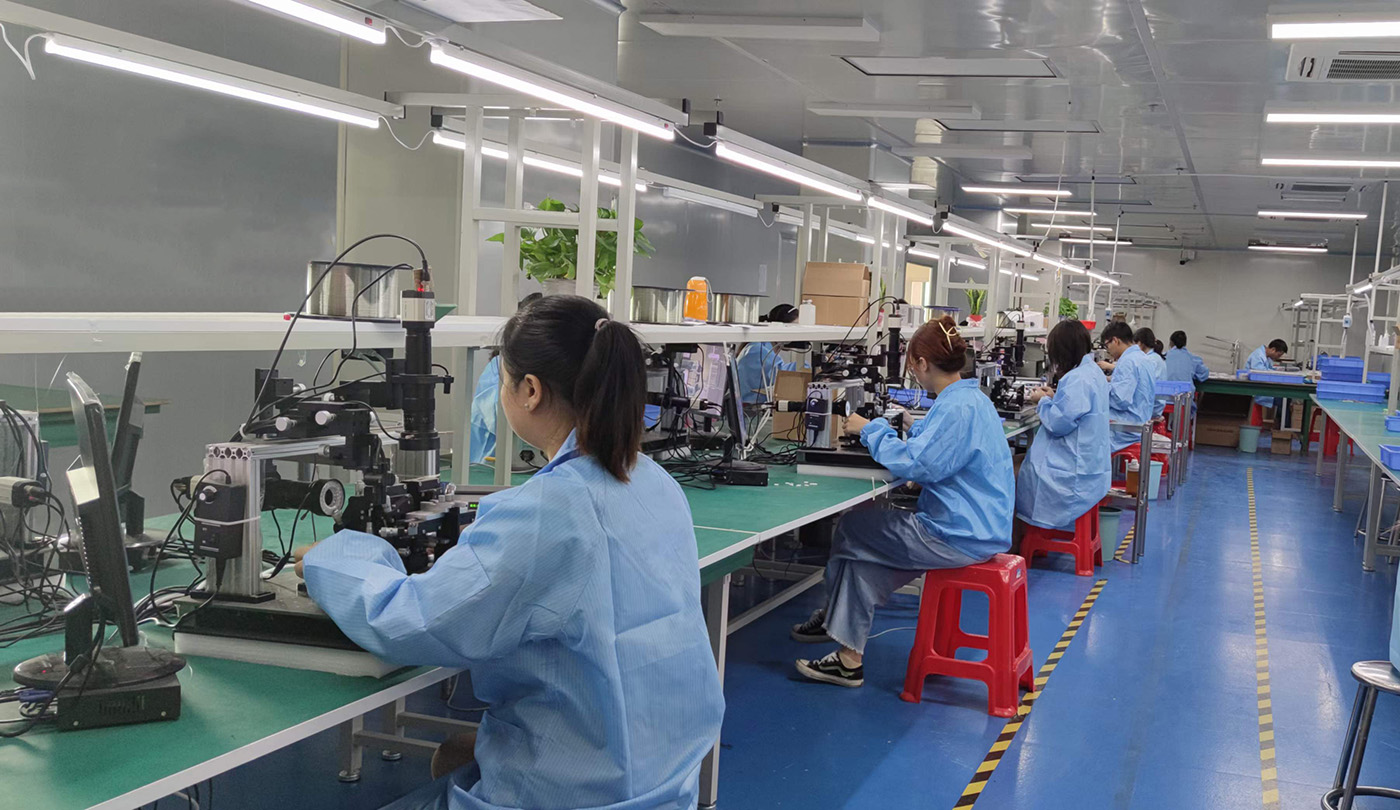
With more than 13 years of experience in manufacturing telecommunication fiber optic products, we follow strictly fiber optic industry standards by using mature scientific methods to deliver your products on time and ensure that 100% products are tested and inspected before shipment.

Whether in dense campus backbones or harsh offshore operations, armored fiber links maintain reliable data transmission pathways.
In manufacturing plants where cables route alongside high-voltage energy lines, armored single-mode patch cables withstand physical crushing and shield data lines from electromagnetic interference (EMI).
Under-floor cable pathways are subject to crushing loads from overlying power lines and heavy equipment racks. Standardizing on armored trunks protects under-floor layouts without requiring restrictive metal trays.
Environmental factors like wind loads, UV exposure, and moisture degrade standard fiber. Heavy-duty TPU-jacketed armored lines ensure stable performance in outdoor telecom enclosures and base station links.
Years of sales and service experience have enabled us to win customers from different regions. Today, we have customers from East Asia, Southeast Asia, Middle East, Eastern Europe, Western Europe, Northern Europe, South America, North America, North Africa, and South Africa.
Win-win cooperation is our constant goal. Many our OEM and ODM products won the Telecom Operator tender and satisfy end-user request.
Our main terminal telecom operators include:
Technical insights compiled by our engineering team to help you make informed procurement decisions.
Standard patch cables rely on aramid yarns and a plastic outer jacket for physical support. In contrast, armored fiber patch cables contain a flexible, helical stainless steel tube beneath the outer jacket. This metal layer shields the fragile inner glass cores from rodents, physical compression, dynamic bending stresses, and high impact forces.
Modern manufacturing techniques ensure the inner helical steel tube maintains a structured bend radius limit. Coupled with bend-insensitive fiber glass (such as ITU-T G.657.A2), these cables allow for compact routing spaces. They retain flexibility while preventing the fiber from bending beyond its critical micro-bend threshold.
Yes, because the inner armor is made of metal (typically SUS304 stainless steel), the cable is considered conductive. For structured building installations, campus backbones, and outdoor setups, grounding is recommended to manage surge risks. For applications where grounding is not feasible, dielectric armored designs (utilizing glass-yarn or specialized polymer rods) should be used instead.
We conduct 100% testing on all fiber assemblies prior to packaging. This process includes insertion loss (IL) and return loss (RL) tests using calibrated optical light sources and power meters, geometric end-face measurements via 3D interferometry, and physical crush resistance checks. Performance data sheets are provided for high-density MPO/MTP and multi-fiber trunks.
 KOCENT OPTEC